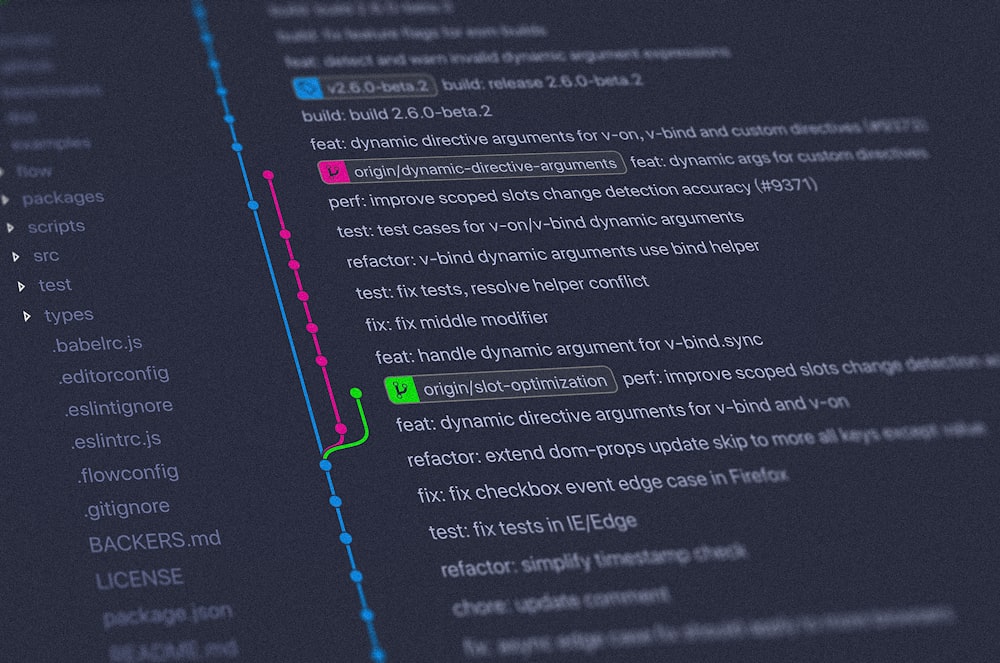
Let's be honest: 30% of software engineering is just janitorial work.
Writing commit messages. Summarizing pull requests. Checking for typos. Resolving merge conflicts where someone just added a newline.
In 2026, if you are doing this manually, you are wasting your time.
ai agents have finally matured enough to handle the "boring parts" of version control, leaving you to focus on the actual architecture. Here is the modern Git stack.
The "Commit Fatigue"
We've all been there. You just spent 4 hours debugging a race condition. You finally fix it. You type:
git commit -m "fix"
Six months later, you are looking at git log and hate your past self.
The Solution: AI Commit Agents.
The Tool: GitHub Copilot CLI
If you have Copilot, you have this built-in.
- Stage your changes:
git add . - Run:
gh copilot suggest -t commit - It analyzes the diff and suggests:
"Fix race condition in
auth.tsby adding mutex lock to session validation."
It's not just a summary; it's a semantic explanation of the change.
The PR Accelerator: Graphite
Pull Requests are where velocity goes to die. You open a PR, and it sits there for 3 days because your team is busy.
Graphite (which recently merged with cursor's AI team) changes this with AI Review.
Before you ping a human, Graphite's agent reviews your code. It catches:
- Console logs left in production code.
- Missing error handling.
- Type mismatches that TS missed.
- Security vulnerabilities (e.g., exposing secrets).
It acts as a "Level 1" reviewer. By the time a human sees your PR, the trivial stuff is already fixed.
Workflow: The "Explain This Diff"
Sometimes you are on the receiving end. You have to review a PR with 50 changed files. Your eyes glaze over.
Instead of reading line-by-line immediately, ask the AI to explain the intent.
GitKraken has this built-in. You can select a commit or a PR and ask:
"What is the architectural change here?"
It might say:
"This PR refactors the billing logic to use stripe Elements instead of the legacy API. It removes
StripeService.tsand introducesPaymentIntentFactory.ts."
Now you have a mental map before you dive into the code.
The "Human Delta" (What AI Can't Do)
AI is great at "What" and "How". It is terrible at "Why".
AI Can Catch:
- "You used
varinstead ofconst." - "This function is too complex."
- "You forgot to export this interface."
AI Cannot Catch:
- "Is this feature actually useful for the user?"
- "Does this align with our Q3 roadmap?"
- "Is this introducing technical debt we'll regret in 2 years?"
The Verdict
The goal of AI in Git isn't to replace the developer. It's to replace the janitor.
- Use Copilot to write your commit messages.
- Use Graphite to catch the typos and lint errors.
- Use GitKraken to understand complex history.
Save your brain cycles for the hard stuff.

Raja CRN
Tech enthusiast and developer.